| Quercus affinis | |
| Author | Scheidw. 1837 Hort.Belg. Tuinb., Int. Ed. 4: 321 1837. |
| Synonyms |
commutata Liebm. 1854 Diagnosis here |
| Local names | |
| Range | NE, C, S and SE Mexico : Sierra Madre Oriental and East of the Volcanic Trans-Mexican Belt (Guanajuato, Hidalgo, Nuevo Leon, Oaxaca, Puebla, Queretaro, San Luis Potosi, Tamaulipas and Veracruz); 1200-2600 m; |
| Growth habit | tree to 18 m high, often smaller, 7-12m; |
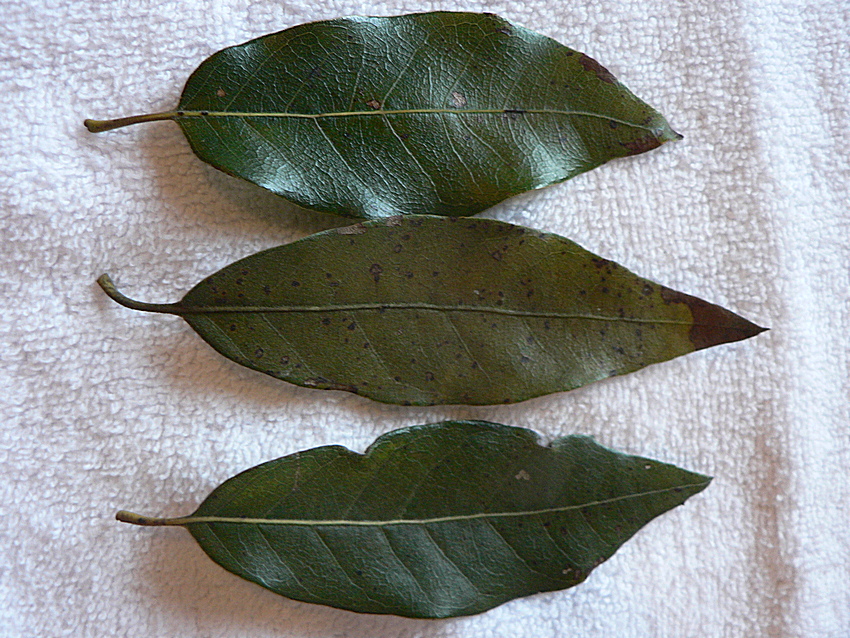
| Leaves | 3.5-13 cm long, 1-3 cm wide; evergreen; coriaceous ; lanceolate to elliptic or elliptic-lanceolate; apex attenuate almost acuminate, bristle-tipped; base acute or cuneate, seldom rounded; margin not revolute, entire or with some (less than 4 pairs) short, bristle-tipped teeth on apical half; at first rusty-colored both sides; mature leaves adaxially dark green, shiny, glabrous or with some stellate trichomes near base; almost concolor beneath with some axil tufts; 5-9 vein pairs, flat above, slightly prominent beneath, conspicuous; epidermis smooth ; hairless petiole 0.5-1,6 cm long; |
| Flowers | in February and March; male flowers on 3-6 cm long, pubescent catkins, with 4-5 stamens. Female inflorescences 2-8 mm long, bearing 1 or 2 flowers; |
| Fruits | acorn 1-1.5 cm long; ovoid to subglobose; 1 to 3 together, almost sessil or on a very short, glabrous peduncle; cup halfround or bowl-shaped, not rolled inside at the margin, enclosing 1/2 or 1/3 of nut, with brown, triangular scales ciliate at margin; maturing in 2 years, from August to November; |
|
Bark, twigs and |
young bark smooth, mature one dark grey, scaly; glabrous or glabrescent twig, 1,5-2.5 mm, becoming grey brown when mature, longitudinaly sulcate; unconspicuous pale lenticels; small ovoid or conical, brown buds, 2-4 mm long, with ciliate margin scales; |
| Hardiness zone, habitat | hardiness zone 7-8; rather fast-growing; prefers acidic soils; sensitive to drought; |
| Miscellaneous | -- A. Camus : n° 229; -- Sub-genus Quercus, section Lobatae; sub-section Erythromexicanae, Series Lanceolatae; -- Very closely related to Q.laurina (which it may hybridize with); Q. laurina is different in having thicker twigs, globose to ovate buds, bigger leaves with abaxially prominent veins, and upper face different from lower one; -- Resembles Q. eduardii but this taxon has fasciate, tangled trichomes on the whole lower side; resembles as well Q. galeanensis which is much more low a shrub and has oblong, elliptic to oblanceolate leaves. |
| Subspecies and varieties |
For Trelease = f. commutata (Liebm.) Trel. 1924 and f. subintegra (A.DC) Trel. 1924 |
| Pictures |
More pictures Here
|